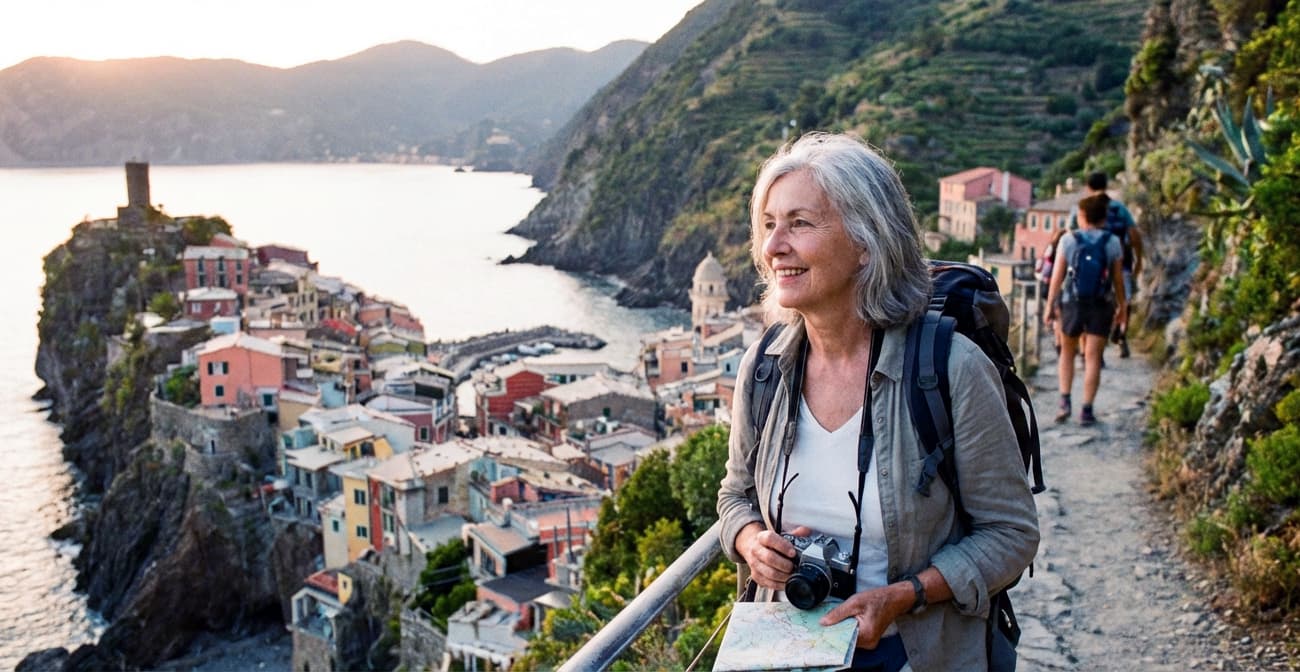
You still want to travel. You just want it to feel comfortable and manageable.
Less sprinting through airports. Less worrying about “what if something happens and I am alone.” More good meals, quieter nights, and time to actually enjoy where you are.
Travel after 60 is different from travel at 25. Health concerns are more real. Energy is not unlimited. Some friends or partners may not want to come along. And the idea of dealing with a problem far from home, by yourself, can feel heavy.
Think of it like taking a long trip in a car you have owned for years. You know the quirks. You know which warning light likes to flicker, how often you need to stop, how the engine sounds when it is working hard. You do not stop driving. You just plan smarter.
This guide walks through calm, practical ways to make solo travel after 60 safer, more comfortable, and more enjoyable, without pretending you have the same body or schedule you had decades ago.
Why Traveling Alone Feels Different After 60 (And Why That’s Not a Bad Thing)
Your body changes, and that matters for travel
You might notice:
- Long flights take more out of you than they used to.
- Stairs, hills, or cobblestones leave you more tired.
- Crowds and noise feel draining.
- Heat or humidity wipes you out faster.
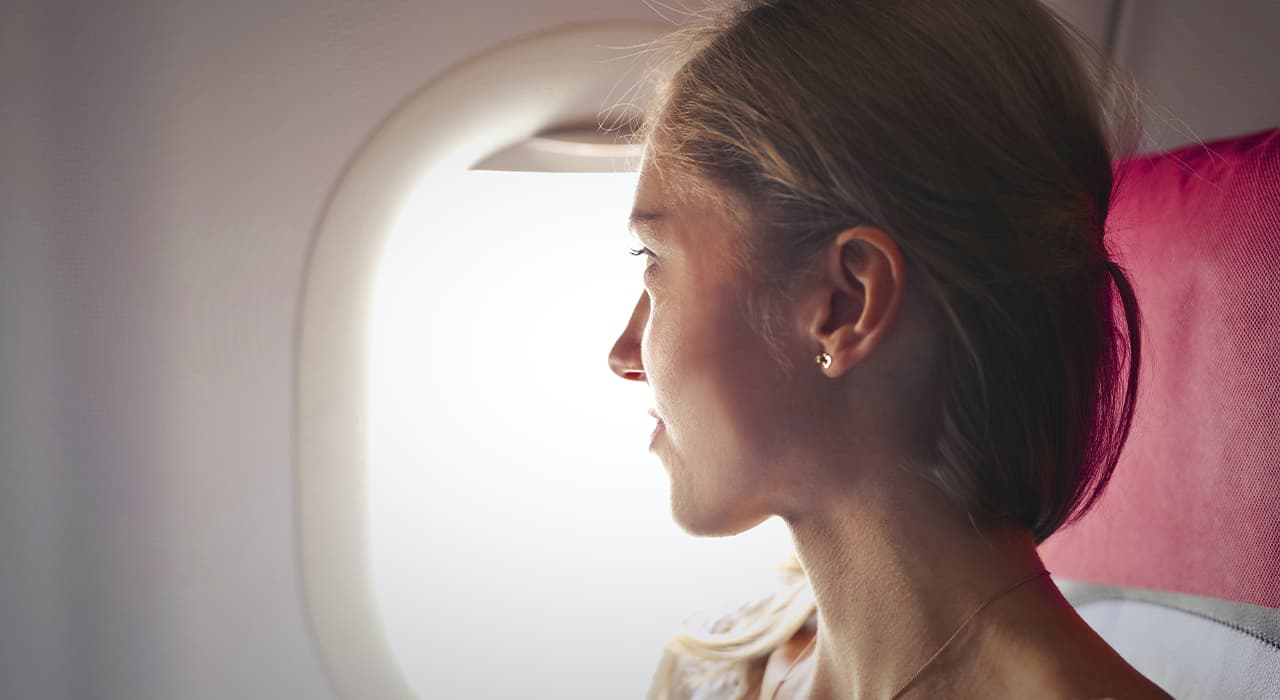
Medical guidance for older travelers points out that long periods of sitting make blood clots more likely, especially on trips over 4 hours. That is why simple things like moving your legs, choosing aisle seats when possible, and taking walking breaks when you can.
None of this means you should not travel. It just means your trip should fit your body, not the other way around.
Your priorities shift in good ways
In your 20s, you might have tried to hit ten attractions in two days. These days, you might prefer:
- One museum or sight in the morning, then a long lunch.
- A walk through one neighborhood instead of racing across a whole city.
- A quiet, comfortable hotel over the absolute cheapest room.
Many retirees still travel several times a year, but they choose slower trips, better sleep, and more comfort. That is not giving up. It is just smarter use of time and energy.
Age also means more travel experience
You have already dealt with delayed flights, noisy hotels, and lost luggage. You know what stresses you out and what does not. You have a good sense of when to push and when to call it a day.
Instead of seeing age as a limitation, treat it like a detailed personal travel manual you have built over a lifetime. You are not a beginner. You are just updating your settings.
Start With Your Health and Your Support System
Before you book a thing, get the basics in place. That way, you are not trying to solve health and safety questions on the fly.
Talk with your doctor before the trip
If you have heart or lung conditions, diabetes, recent surgery, or a history of clots, a short travel checkup is worth it.
Bring your rough plan and ask about:
- Flying, especially flights over 4 hours.
- Long drives where you will sit for many hours.
- Destinations at high altitude or with high heat.
- How often you should walk, stretch, and drink water.
- Symptoms that mean “seek care now, do not wait.”
The CDC’s Older Adults and Healthy Travel page is a helpful reference to share with your doctor. It covers health kits, vaccines, and common risks for travelers over 60.
Create a clear medication plan
A little preparation around medications can prevent huge stress later.
- Bring more than you need, within legal limits, in case of delays.
- Keep medications in original labeled bottles when possible.
- Pack all medications in your carry-on, not in checked luggage.
- Carry a printed list of:
- All prescriptions and over-the-counter drugs.
- Doses and times you take them.
- What each one is for.
The American Geriatrics Society’s tip sheet on Safe Travel Tips for Older Adults recommends exactly this kind of medication list, including both brand and generic names. Keep a photo or digital version on your phone too, so you can email it to a clinic if needed.
Set up a simple support system at home
You may be traveling solo, but you do not need to feel alone.
- Share your itinerary with a trusted person at home.
- Agree on daily or every-other-day check-ins.
- Decide what they should do if they do not hear from you.
- Consider temporary location sharing on your phone with one trusted person.
The U.S. State Department’s advice for Age 65+ Travelers also suggests leaving emergency contacts and passport details with family or friends and knowing how to reach the nearest embassy or consulate. Little steps like this take some weight off your shoulders.
Build a Trip Around Your Energy, Not Your Old Travel Habits
Your real travel “budget” is your energy. Treat it like something valuable.
Choose routes that are kinder to your body
When possible:
- Pick flights with fewer layovers, even if they cost a bit more.
- Avoid very tight connections.
- Aim to arrive in daylight when getting around is easier.
- Block off a buffer day after arrival with nothing scheduled.
Extra time for rest and adjustment makes the whole trip feel calmer.
Design slower, gentler days
Old pattern: “If I am in Rome, I have to see everything.”
New pattern: “I will pick one or two things each day and enjoy them properly.”
You might:
- Book one main activity in the morning.
- Plan a long, seated lunch.
- Keep evenings flexible so you can decide based on your energy.
You get fewer rushed photos and more real memories.
Pick accommodations that support comfort and safety
Before you book, check:
- Elevator access. Especially in older buildings and small guesthouses.
- Walk-in or low-step showers. Bonus if there are grab bars.
- A central location. Close to groceries, pharmacies, and a few restaurants.
- Noise level. Ask for a room away from elevators or busy streets if that bothers you.
Spending a little more for a better location and layout often matters more than an impressive lobby.
Getting Around Safely: From Short Rides to Long-Distance Trips
Local rides: choose what feels realistic, not “tough”
You do not need to prove anything by hauling luggage through three bus transfers.
For many solo travelers over 60, it is completely reasonable to:
- Take taxis or rideshares between the airport and hotel.
- Use a taxi at night, instead of walking long distances.
- Take a short ride up steep hills instead of climbing from the bottom.
Yes, it costs more than the bus. It may save you from falls, exhaustion, and getting turned around.
If you use a wheelchair or have mobility challenges
A bit of research before your trip can make moving around much easier.
- Search for accessible taxis, shuttles, or rides in your destination.
- Email hotels with specific questions about ramps, elevator size, and bathroom layout.
- Look for official tourism or city websites that describe accessibility of buses, trams, and major sights.
If you are unsure, call. Write down the names of companies or staff who confirm details so you can refer back to them.
When flying feels like too much
For some travelers, especially those with complex health needs, airports feel overwhelming. Long-distance non-emergency medical transportation can sometimes be a better fit for state-to-state trips.
Providers like Call The Care help older adults and people with mobility challenges make longer journeys for medical appointments, relocations, or family visits without dealing with airports. They operate planned, non-emergency trips, so they are not a replacement for an ambulance, but they can bridge the gap between regular taxis and emergency services.
If you consider this route, compare companies, ask exactly what level of assistance they provide, and confirm pricing and policies in writing.
Pack for Comfort and Make the Journey Kind to Your Body
Good packing is one of the easiest ways to make solo travel feel manageable instead of stressful.
Choose luggage you can handle alone
Pack for the body you have now, not the one you remember from years ago.
- Test your suitcase at home. Can you lift it without straining?
- Aim for one medium rolling suitcase and a light day bag.
- Consider a four-wheel spinner so you can roll it beside you.
If it feels too heavy on a good day at home, it will feel even heavier after a long travel day.
Health and comfort must-haves in your carry-on
Keep these with you, not in checked bags:
- All your medications and your printed medication list.
- A small pill organizer for daily use at your destination.
- Compression socks if your doctor agrees they are right for you.
- A compact first-aid kit with basics you already use at home.
- Hand sanitizer, tissues, and any masks you like to wear in crowds.
- Earplugs or noise-canceling headphones.
- An eye mask and light scarf or travel pillow for better rest.
Simple comforts can turn a long flight or train ride from “barely survived” to “tired but okay.”
Clothing that works for walking and resting
Aim for soft, breathable layers.
- A light top, sweater, and jacket you can add or remove.
- Pants with comfortable waistbands and easy movement.
- Shoes that slip on and off, support your feet, and grip well.
If you would not wear it for a full day at home, it probably does not belong in your luggage.
Staying Safe, Connected, and Calm While You Travel
Stay connected without feeling glued to your phone
You do not need constant notifications to stay safe. Just a few habits.
- Keep up with your agreed check-ins to your contact at home.
- Carry a small card in your wallet with:
- Hotel name, address, and phone number.
- Local emergency number.
- Your main emergency contact.
- Store hotel details offline as well as on your phone.
If your phone dies or gets lost, you can still show someone where you need to go.
If you feel unwell on the road
Start with a simple process:
- Stop and rest in a safe place.
- Drink water and have a light snack if you can.
- Check your symptoms.
- Use your medication and conditions list if you need to seek care.
For mild issues like a small headache or normal travel tiredness, rest may be enough. For chest pain, trouble breathing, sudden weakness, confusion, or strong pain, treat it as urgent. Call local emergency services or ask hotel staff to help you reach them.
Telehealth services, if you have access, can also help you decide what to do.
Handling nerves or loneliness as a solo traveler after 60
Feeling nervous or lonely does not mean you should not travel. It just means you are human.
Some ideas that help many older solo travelers:
- Book a few small-group day tours.
- Talk with hotel or guesthouse staff about their favorite safe areas to walk or eat.
- Choose restaurants with counter seating where solo diners are common.
- Carry a small card that says why you chose this trip. Read it when doubts show up.
You are not trying to impress anyone. You are there for you.
You’re Still Allowed to Travel on Your Own Terms
Adjusting how you travel after 60 is not giving up. It is smart self-respect.
You might prefer fewer stops, better beds, more taxis, and shorter days. You might pick a comfortable train or a medical transport van over a stressful flight. You might choose a weekend in a nearby city as a first step instead of a long international marathon.
Start with a trip that feels manageable: a short train ride to see family, a guided tour with your own room, or a two-night stay in a nearby town. Prove to yourself that you can do it in a way that feels safe and kind to your body.
Travel does not stop belonging to you just because your energy or health changed. You are still allowed to explore, on your schedule, in your way, with the comfort and support you need now.